Briefly about Bosnia and Herzegovina
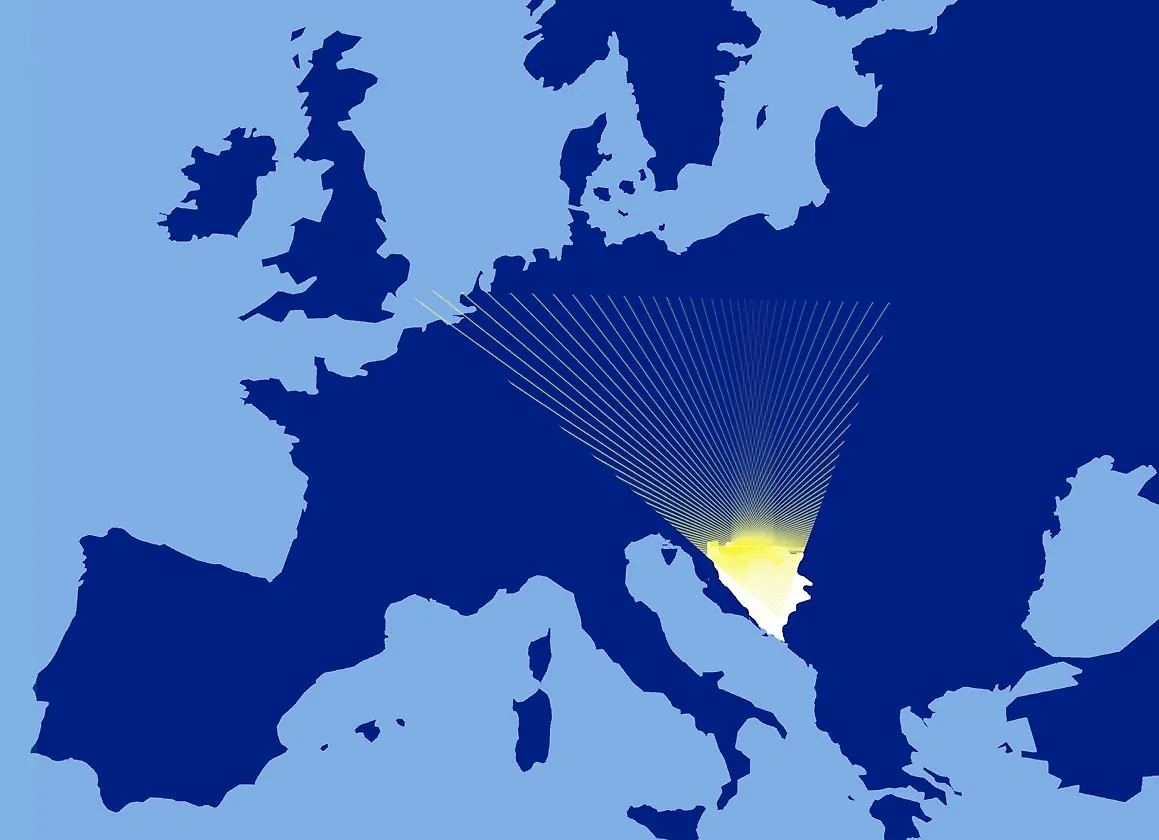
Official name: Bosnia and Herzegovina (abbreviation BiH)
Capital city: Sarajevo (population 500,000)
Largest cities in BiH: Banja Luka, Bihać, Mostar, Tuzla, Zenica
Geographical location: Southeastern Europe, borders Croatia (932km), Serbia (312km) and Montenegro (215km)
Area: 51,209 km2
Population: 3.43 million
Religions: Muslims (44%), Orthodox Christians (32%), Roman Catholics (17%), Other (7%)
Constituent peoples: Bosniaks, Serbs, Croats and Others
Official languages: Bosnian, Serbian and Croatian
Territorial-administrative organization: Two entities (Federation of BiH and Republika Srpska) and Brčko District of BiH
Political organization:
BiH is organized as a parliamentary democracy: two houses of Parliament (Representative House and the House of Peoples), a three-member rotating Presidency, the Council of Ministers and the Constitutional Court
GDP: EUR 23.3 billion (2022)
GDP per capita:: 6,781 EUR (2022)
Currency: Convertible Mark (BAM-official abbreviation; KM-everyday use)
Exchange rate: 1 EUR = KM 1.95 (fixed exchange rate)
Relief:
Bosnia and Herzegovina is predominantly a mountainous country with Dinaric mountains, with the highest point on Mount Maglić at 2,387m. In the north, the Sava River shaped a fertile valley, which is also the largest flat expanse interspersed with low mountains.
The southern part of the country has a karst relief, with access to the Adriatic Sea in the southwest with 23 km of sea coast.
Climate:Mountain, temperate continental and Mediterranean
Latitude/Longitude:44 N, 18 E
Time Zone:Central European Time CET (GMT + 1 h)
Internet Domain:.baInternational Dialing Code:+387